PHE Gasket Temperature Range: Material Chart & Picks
PHE Gasket Temperature Range: Which Material Fits Your Duty?
Every PHE gasket has a temperature ceiling and a floor. Run past either and it dies: heat hardens the rubber until it cracks, cold leaves it stiff and unable to seal. The heat exchanger gasket temperature range, not the price, decides most grades.
The Working Temperature Chart
Material | Working range* | Good for | Watch out for
EPDM | -40 to +150°C | hot water, steam, dilute acids | oils, hydrocarbons
Peroxide EPDM (HEPDM) | -40 to +160°C | hot water and mild chemicals | still no oils
NBR | -20 to +110°C | oils, fuels, plain water | ozone, ketones, hot water
HNBR | -30 to +150°C | hot oil, refrigerants, steam | cost
Viton (FKM) | -20 to +200°C | high temperature, acids, oils | cost
Silicone | -60 to +200°C | very low temperature, food | oils, low strength
*Common engineering figures. Confirm against your duty before ordering.
EPDM Gasket Temperature Range
EPDM covers hot water, steam and dilute acids from about -40 to +150°C, and is the cheapest pick for water. Past that range, or in oil, it swells and ages fast.
HNBR Gasket for a Plate Heat Exchanger
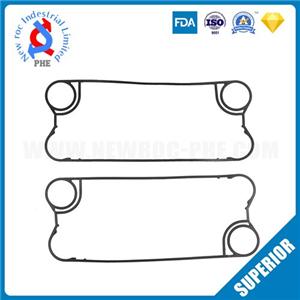
An HNBR gasket plate heat exchanger setup holds up where NBR gives out: hot oil, refrigerant and steam duties to about +150°C. It costs more, so use it when heat is the problem.
FKM Gasket Heat Exchanger
An FKM gasket heat exchanger unit takes the hard duties. FKM is Viton, and it runs to about +200°C with mineral acids, oils and solvents. Save this premium grade for duties the others cannot take.
Silicone Heat Exchanger Gasket
A silicone heat exchanger gasket handles deep cold and high heat, about -60 to +200°C, and suits food contact. The trade-off is mechanical strength; oils still rule it out.
Three Quick Rules
Treat the top number as a ceiling, with 10 to 15°C in hand.
The fluid matters as much as the heat; hot oil at 120°C is still not EPDM work.
Between two grades, go up; the price gap is small next to a shutdown.
FAQ
Q: What is the temperature range of a PHE gasket?
A: Roughly -40 to +150°C for EPDM, up to +200°C for Viton (FKM), and -60 to +200°C for silicone.
Q: Can I run EPDM above 150°C?
A: No. Move to HEPDM or FKM.
Q: Does higher temperature shorten gasket life?
A: Yes. Every 10 to 15°C closer to the limit cuts service life.
Still Not Sure Which Grade to Order?
Send us the fluid, the working temperature and a photo of your old gasket. We will confirm the material and quote. Email info@newroc-phe.com.