Replacement PHE Plates: How to Match & Order Correctly
Replacement PHE Plates: How to Match and Order Them Correctly
A plate that looks the same size is not always the same plate. Replacement heat exchanger plates have to match the original in more ways than outline, or the pack will not seal and the duty will drift.
Why the Corrugation Decides
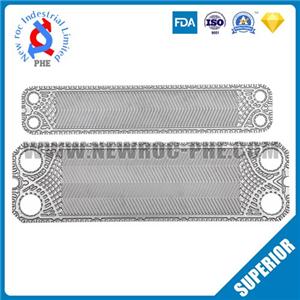
Plates are pressed into a chevron, or herringbone, pattern. Ridges cross from plate to plate, and the channels between them carry the flow. The plate heat exchanger corrugation pattern, the chevron angle, and the corrugation depth together set heat transfer and pressure drop. A plate that matches only in length and width will still change the duty.
How to Match Plate Heat Exchanger Plates
Read the plate model from the nameplate or the drawing, then check four things against the old plate: the corrugation pattern and angle, the corrugation depth, the port positions and diameter, and the overall plate dimensions. Plates are also handed. They stack in an alternating order, and the first plate in many units is gasketed on both sides. Keep the stack sequence when you rebuild the pack.
Plate Heat Exchanger Plate Material
Most plates are stainless, commonly 304 or 316L. Where the duty attacks stainless, plate heat exchanger plate material moves up: titanium for seawater and chlorides, SMO 254 and the Hastelloys for stronger media and higher temperatures. The choice follows the fluid, the chloride level, and the temperature, not the price alone.
Ordering a Full Plate Pack
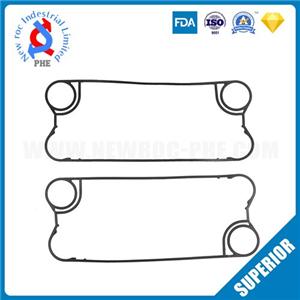
Plate packs wear together. Replacing a few plates in a worked pack leaves the new plate under uneven compression, a common cause of a weep. A full plate heat exchanger plate pack, pressed to the same pattern as the originals, keeps the load even across the pack. For a quote, send the plate count, the fluid and temperature on each side, and photos of the nameplate and an old plate.
FAQ
Q: Can I use plates from another maker if they fit the frame?
A: The outline can fit while the pattern differs. Match the corrugation and ports to the original, not just the frame.
Q: Do I need to change plates and gaskets together?
A: Not always, but a new plate in an old pack can sit unevenly. Ask before mixing.
Q: What should I send for a plate quote?
A: The nameplate photo, an old plate or its measurements, the plate count, and the fluids and temperatures.
Order Replacement Plates
Send a photo of the nameplate and an old plate, the plate count, and your fluids and temperatures. We will match the pattern and quote within 24 hours. Email info@newroc-phe.com.